
-

Production of wind blade energy storage batteries
Swedish startup Sinonus is transforming discarded wind turbine blades into large batteries to create a cutting-edge energy storage solution. Wind turbines evolve daily as engineers push the envelope, building offshore wind farms far out to sea and creating. . Electricity storage can shift wind energy from periods of low demand to peak times, to smooth fluctuations in output, and to provide resilience services during periods of low resource adequacy. Although interconnecting and coordinating wind energy and energy storage is not a new concept, the. . Sinonus' tech can charge carbon fiber, a component of turbine blades, and use it to store energy like a battery. Through an exploration of the evolution from traditional materials to cutting-edge. . By comprehensively applying the complementary advantages of energy storage, wind power, photovoltaics and diesel power generation, we can achieve optimal energy allocation, enhance regional energy self-sufficiency, reduce the construction and maintenance costs of traditional distribution systems. .
[PDF Version]
-

Wind power generation in various parts of China
This research presents a comprehensive exposition of China's journey in wind energy, addressing its milestones in areas such as installed capacity, technological breakthroughs, spatial distribution, ecological repercussions, and economic dividends. [1] With its large land mass and long coastline, China has exceptional wind power resources: [2] Wind power remained China's third-largest source of electricity at the end of 2021, accounting. . From steppe to power source, China's wind energy sector is revolutionizing the country's electricity supply and taking on a global leadership role. With its vast landmasses in the north and an extensive coastline, China has optimal conditions for generating wind power. In total, these wind power plants has a capacity of 50892.
[PDF Version]
-
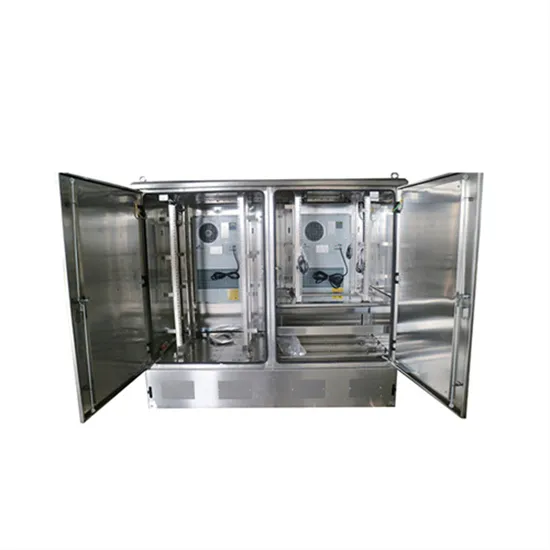
Wind power generation wind tube processing and production
Wind turbines work on a simple principle: instead of using electricity to make wind—like a fan—wind turbines use wind to make electricity. Wind turns the propeller-like blades of a turbine around a rotor, which spins a generator, which creates electricity. While their operation might seem simple, the process of manufacturing a wind turbine is an impressive blend of engineering, design, materials science, and precision. . Wind energy is the kinetic energy of the motion of a large mass of air on the surface of the Earth, which is produced by the non-uniform heat of the Earth's surface by the Sun. The air above the ground gets heated and expanded by the solar heat which is pushed upward by cool dense air causing the. . Wind turbines aren't just big towers. They are big opportunities for achieving a 100 percent clean energy future. That's enough to power 39 million homes.
[PDF Version]
-

Production cost of wind blades
The answer ranges from hundreds of thousands to several million dollars per blade, depending on size, materials, and application. But the real cost story doesn't end there. . This report is available at no cost from the National Renewable Energy Laboratory (NREL) at www. Golden, CO: National Renewable Energy. . Blade price ranges by size category (assumptions: standard glass/ carbon fiber composites, single-piece or segmented blades, and normal production runs): Low $120,000–$170,000; Average $180,000–$260,000; High $300,000–$350,000 per blade. Per-meter pricing typically falls in the $4,000–$6,000 range. . But for operators, investors, and engineers, one critical question often arises: how much does a wind turbine blade cost? The answer is not straightforward. In this detailed guide, we'll explore the factors influencing blade. . Wind turbine blades represent a significant portion of a turbine's overall expense; their cost varies greatly depending on size and materials, typically ranging from $200,000 to over $400,000 per blade. Larger blades, while more efficient, require greater material inputs and production time. . Sandia National Laboratories is a multi-program laboratory managed and operated by Sandia Corporation, a wholly owned subsidiary of Lockheed Martin Corporation, for the U.
[PDF Version]
 MENU
MENU