
-
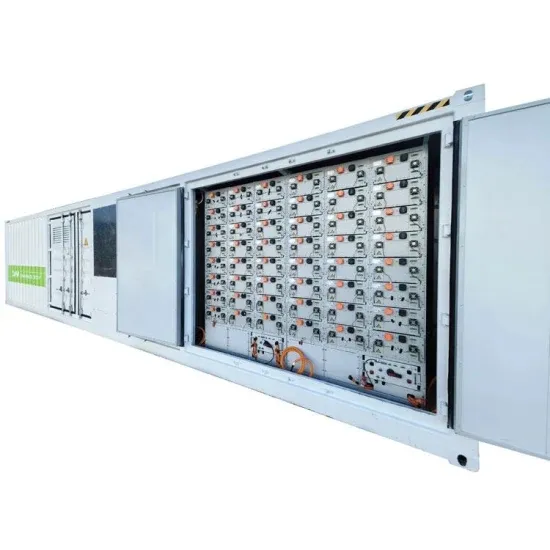
Gree Titanium Grid Frequency Regulation Energy Storage System
This paper investigates the control of GESS for optimizing energy flow during voltage and frequency regulation. . That's enough to store power from 100 soccer fields of solar – ready for the energy revolution? 🌟" Key Highlights ✅ Scale: 503MWh total, 100 x 5MWh liquid-cooled container units. ✅ Innovation: Each container packs 48 x 1P104S liquid-cooled battery packs., Massachusetts Institute of Tech. (2008) Submitted to the Department of Electrical Engineering and Computer Science in partial ful llment of the requirements for the degree of Doctor of Philosophy at the Massachusetts Institute of Technology June. . "Energy storage systems can respond to frequency deviations within milliseconds - 10x faster than traditional thermal plants. " - International Energy Agency Report 2023 Battery energy storage systems (BESS) have emerged as the most responsive frequency regulation technology, offering unique. . Shenzhen Gooree Energy Storage Technology Co. The study evaluates the regulation capabilities of GESS with different motor inertias during a Texas grid event: one with a high-speed, low-inertia motor and another with a low -speed. .
[PDF Version]
-

Titanium lithium battery energy storage
The Log9 company is working to introduce its tropicalized-ion battery (TiB) backed by lithium ferro-phosphate (LFP) and lithium-titanium-oxide (LTO) battery chemistries. Unlike LFP and LTO, the more popular NMC (Nickel Manganese Cobalt) chemistry does have the requisite temperature resilience to survive in the warmest conditions such as in India. LTO is not only temperature resilient, but also has a long life.
[PDF Version]
-

Disadvantages of vanadium titanium solar battery cabinet
The primary drawback is the high upfront cost, driven by the use of vanadium—a relatively rare and expensive metal. Vanadium accounts for ~30–40% of VRFB system costs, making them less competitive with lithium-ion batteries for small-scale or short-duration applications. However,their low energy density and hig cost still bring challenges to the widespread t up to 20-25 yearswith over 10,000 charge-discharge cycles. These batteries are non-flammable,recyclable,and ideal s promising solution for. . According to an independent analysis by market intelligence and advisory firm, Guidehouse Insights, global annual deployments of vanadium redox flow batteries (VRFBs) are expected to reach approximately 32. Vanadium flow batteries excel in scenarios where energy production. . They are characterized by their ability to store large amounts of energy and release it quickly. The two primary types are pumped hydro storage and flywheel storage. [pdf] Who makes lithium energy storage?IES specialises in manufacturing Lithium Energy storage for residential, C&I and utility scale. . The energy storage battery management system (BMS) and the power battery BMS are very similar in overall structure and core functions, but due to different application scenarios, there are obvious differences between the two in design logic, communication protocol, hardware structure, etc.
[PDF Version]
-

Titanium calcium solar cell power generation
Among the most exciting developments is the emergence of calcium-titanium ore-based solar cells, more commonly known as perovskite solar cells. These materials have shown remarkable potential to outperform traditional silicon-based solar cells in terms of efficiency, cost, and. . Silicon calcium titanium ore solar cells will completely change the power generation efficiency Traditional solar cells based on silicon semiconductor compounds have a theoretical maximum efficiency of 29% in converting sunlight into electrical energy. Now. . [Ti]JTCFNJXQEFODHE-UHFFFAOYSA-N0. Above-mentioned preparation method includes the following steps: that offer matrix and perovskite. . The country has now unveiled the first solar panel that makes use of titanium – a technology that could potentially be 1000 times more powerful than traditional cells. . In a collaboration between researchers at Monash University in Australia and Wuhan University of Technology in China, the pair say they were able to achieve a conversion efficiency of 21% using lead acetate as a precursor material for the manufacture of formamide-caesium chalcogenide solar cells.
[PDF Version]
 MENU
MENU